Cement and ceramic industry
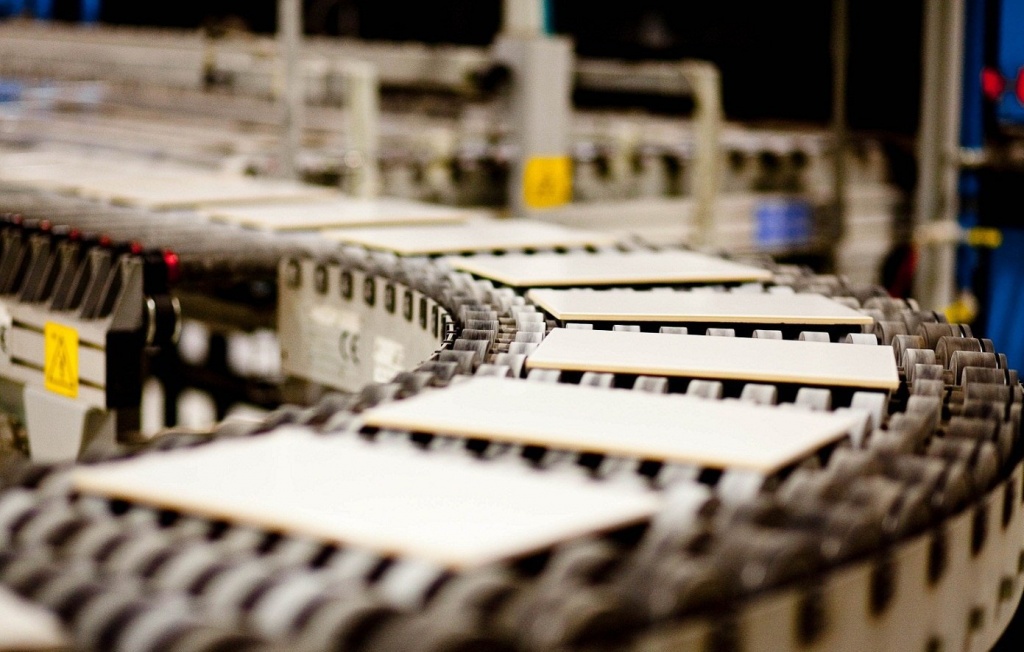
Today, cement is deservedly considered the basic material on which the modern construction industry is based. There are many varieties of cement depending on the type of clinker, the purpose of the cement, the mineralogical composition and other criteria. And in each individual case, at all stages of cement production, its continuous quality control is required.
One of the tasks of quality control in cement production is to determine the exact mineralogical composition of clinker, raw meal and cement itself.
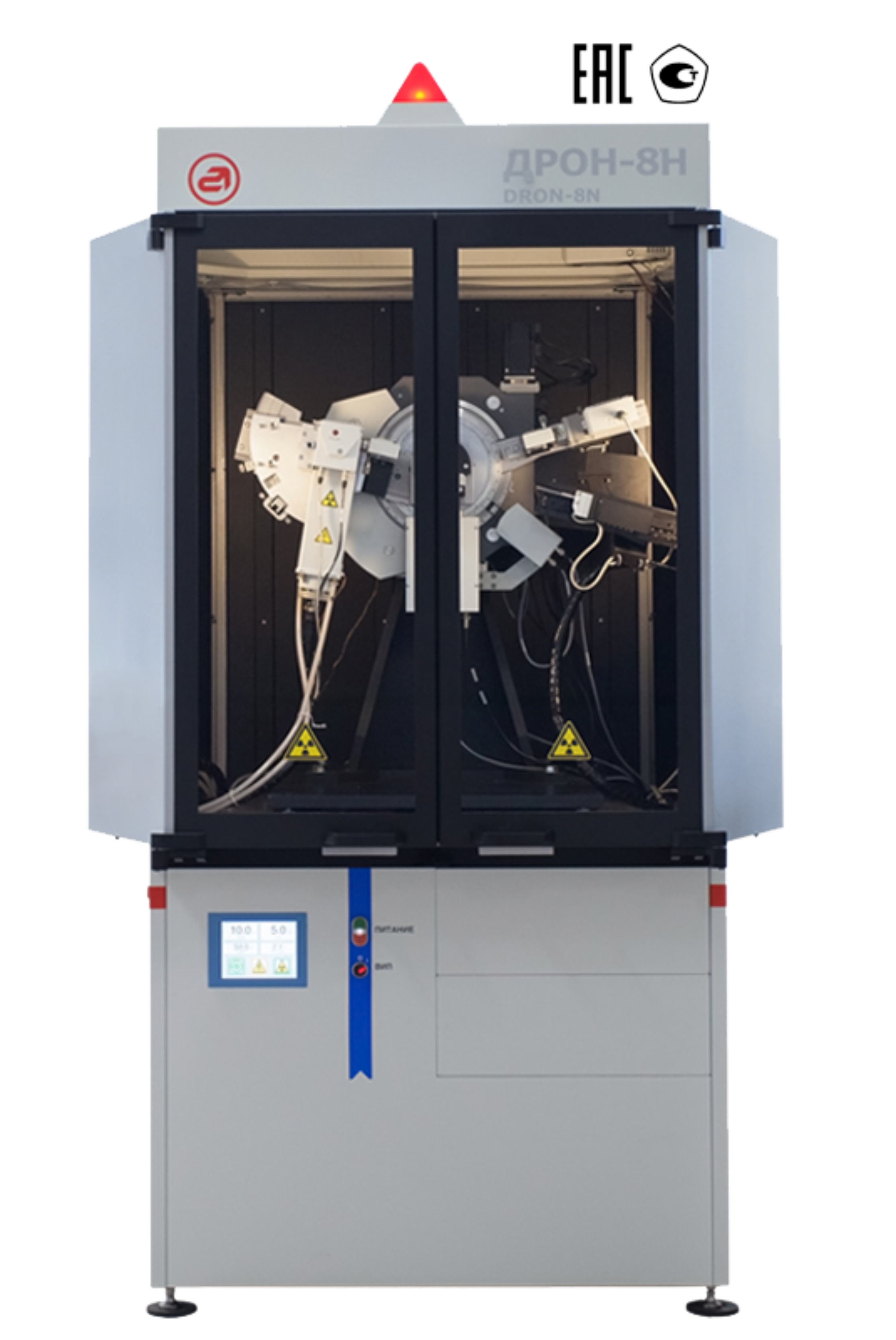
The X-ray diffraction method is the most express and reliable non-destructive method for determining the mineralogical composition. It allows not only to determine the main components of clinkers and cements, but also to diagnose microimpurities, including undesirable ones, such as free lime. In addition, this method allows you to isolate various polymorphic modifications of individual phases, for example, cubic and rhombic for tricalcium aluminate, which cannot be done by the calculation method.
Conducting X-ray phase analysis of multicomponent powder samples of clinker and cement
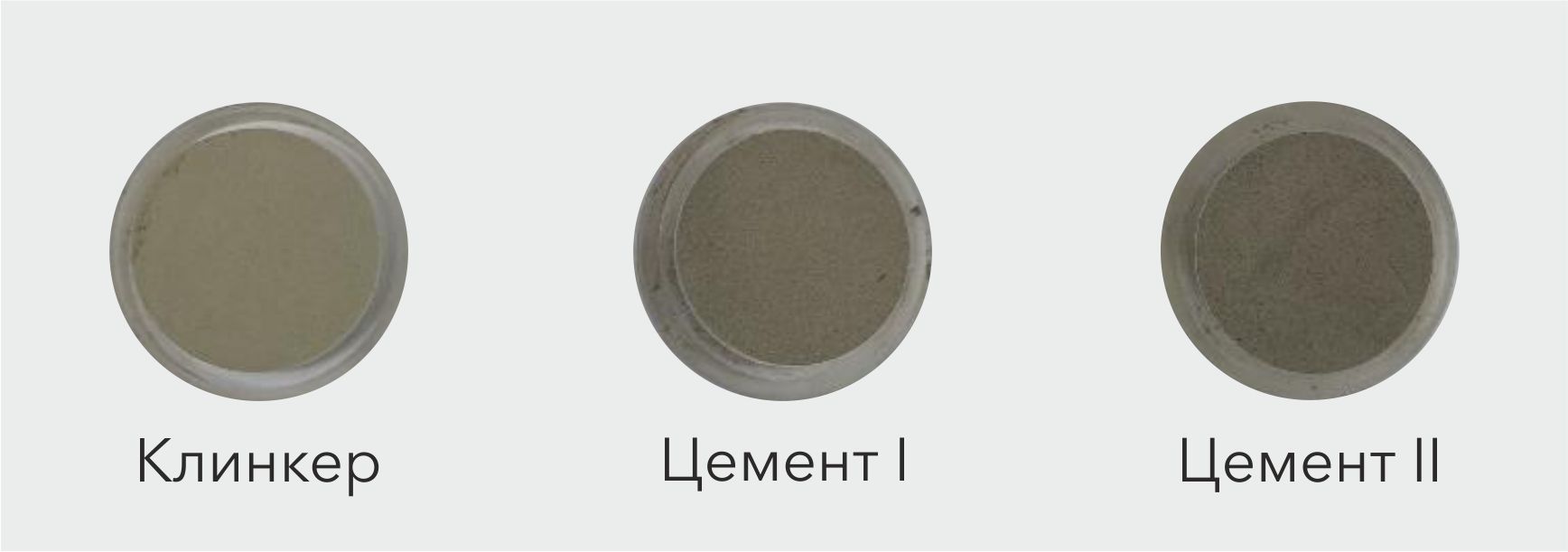
Powder samples in quartz cuvettes prepared for measurement (Clinker, cement I, cement II)
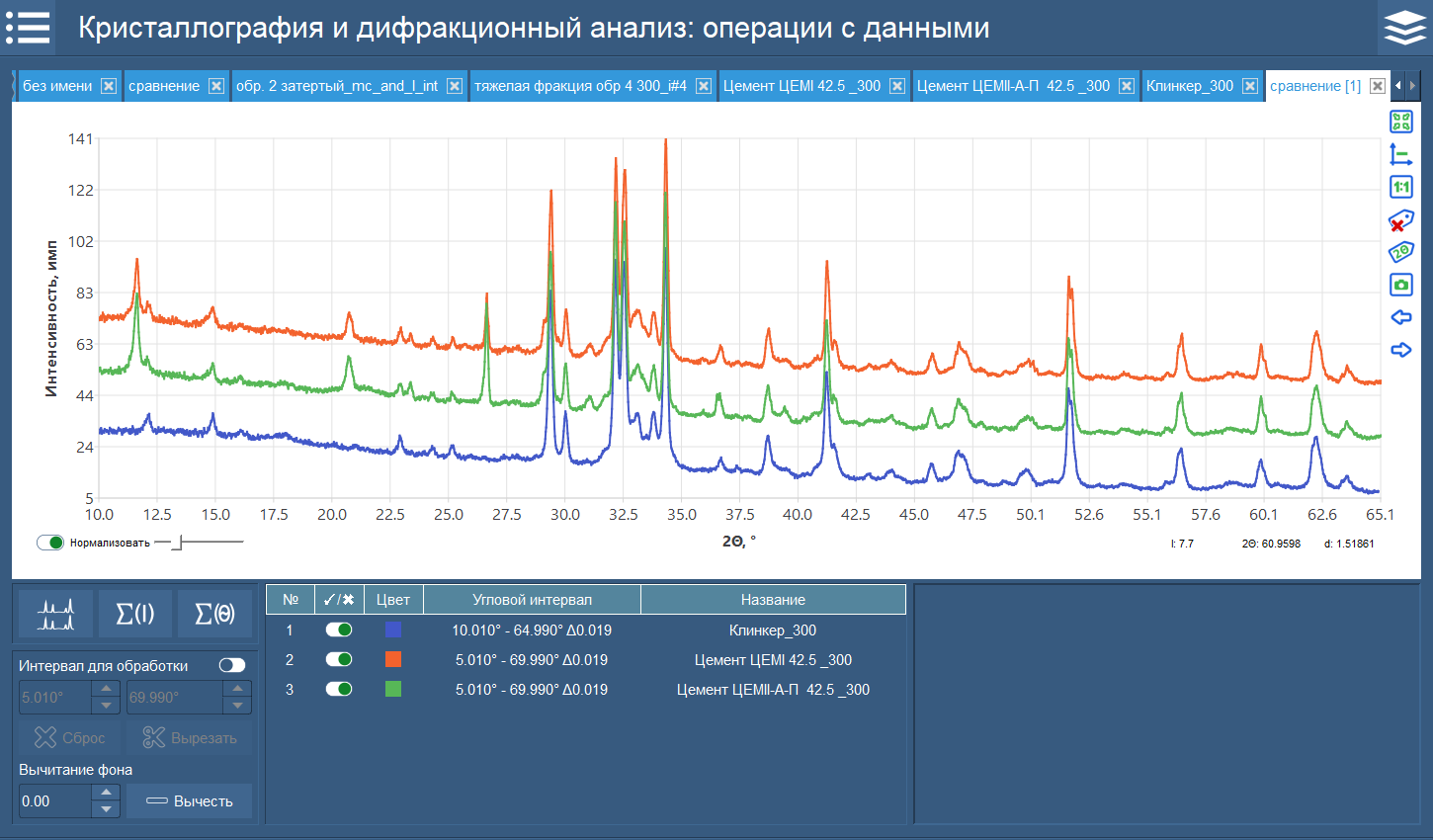
Measured X-ray diffraction patterns of samples in the range of 2θ angles from 10 to 65 degrees.
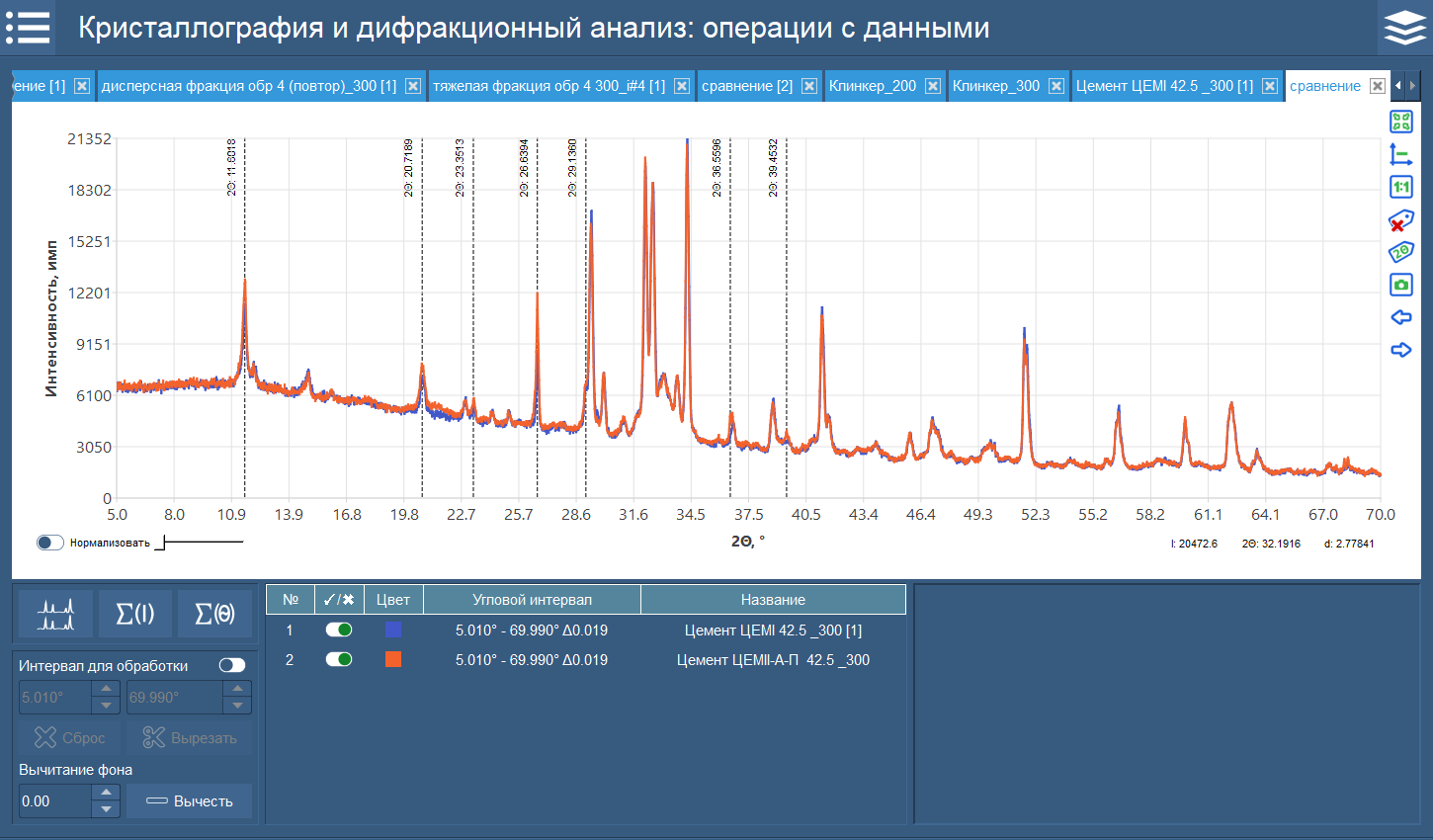
Comparison of X-ray patterns of cement samples. The main difference is observed in the intensities of gypsum (Gy) and quartz (Qu) reflections
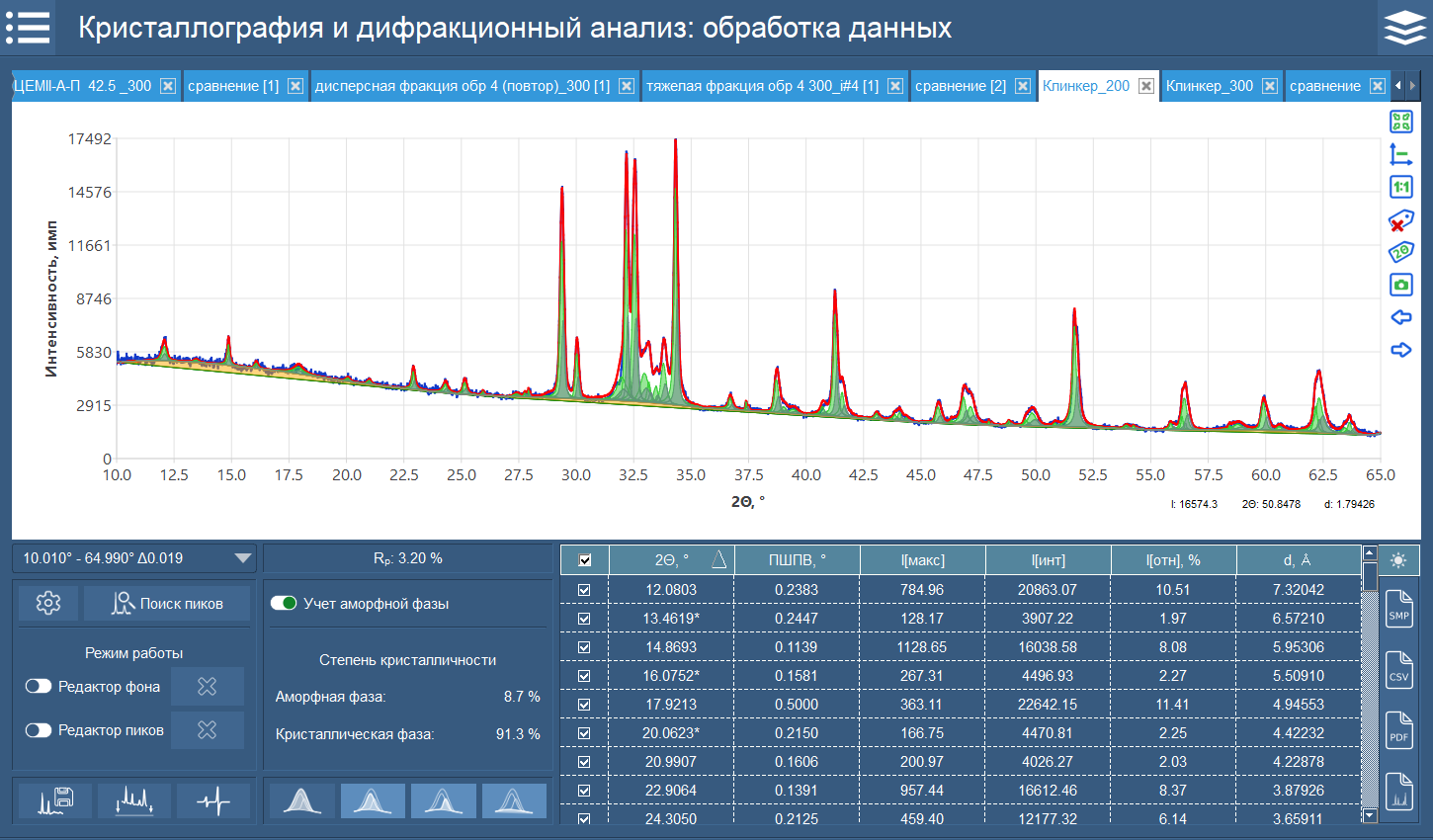
An example of processing a clinker X-ray pattern with calculation of the amorphous phase content
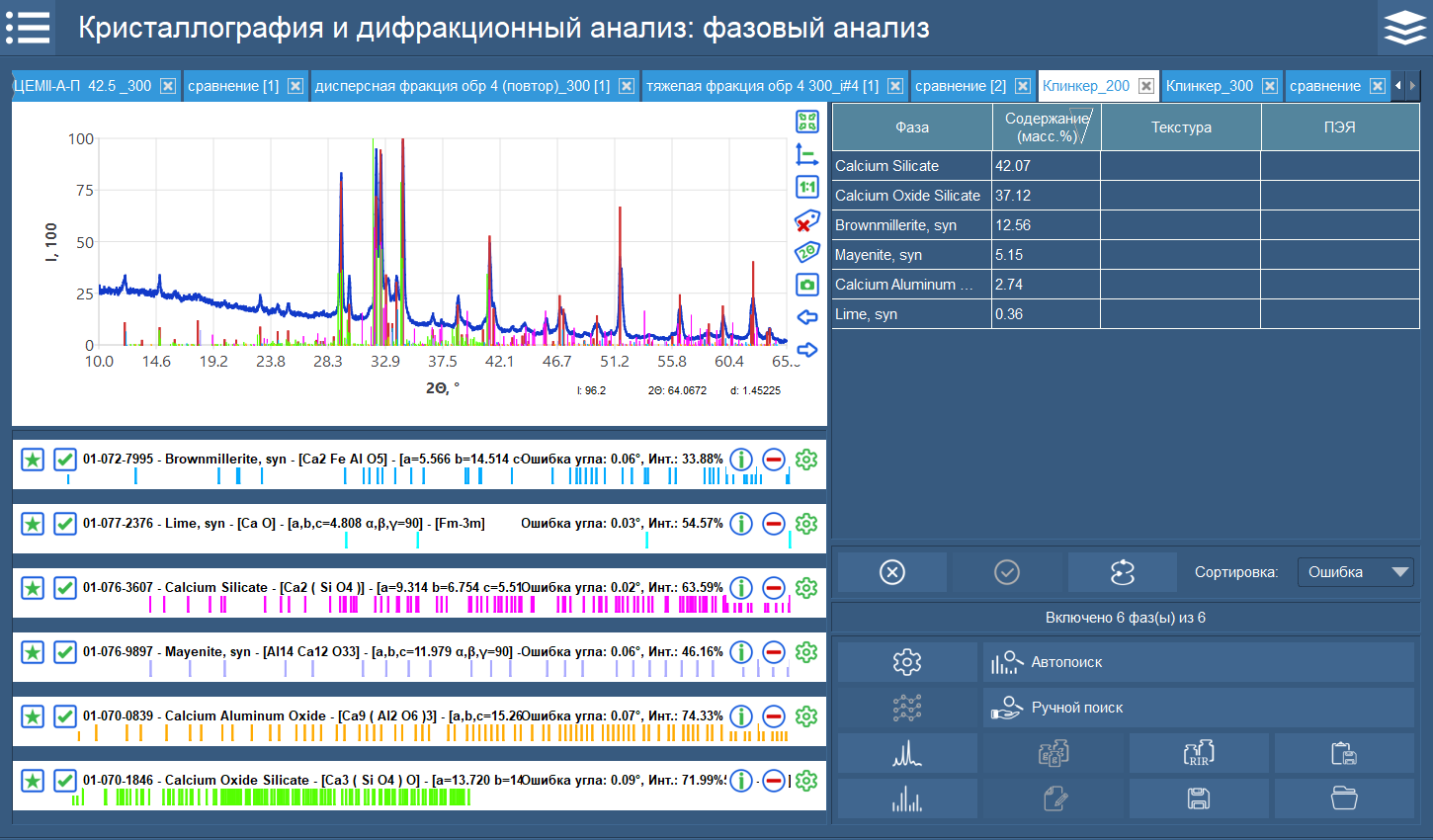
Diagnostics and preliminary assessment of mineral component concentrations in a clinker sample (qualitative and semi-quantitative phase analysis using the RIR method using a built-in powder standard file)
Quantitative phase analysis by the full-profile Rietveld method
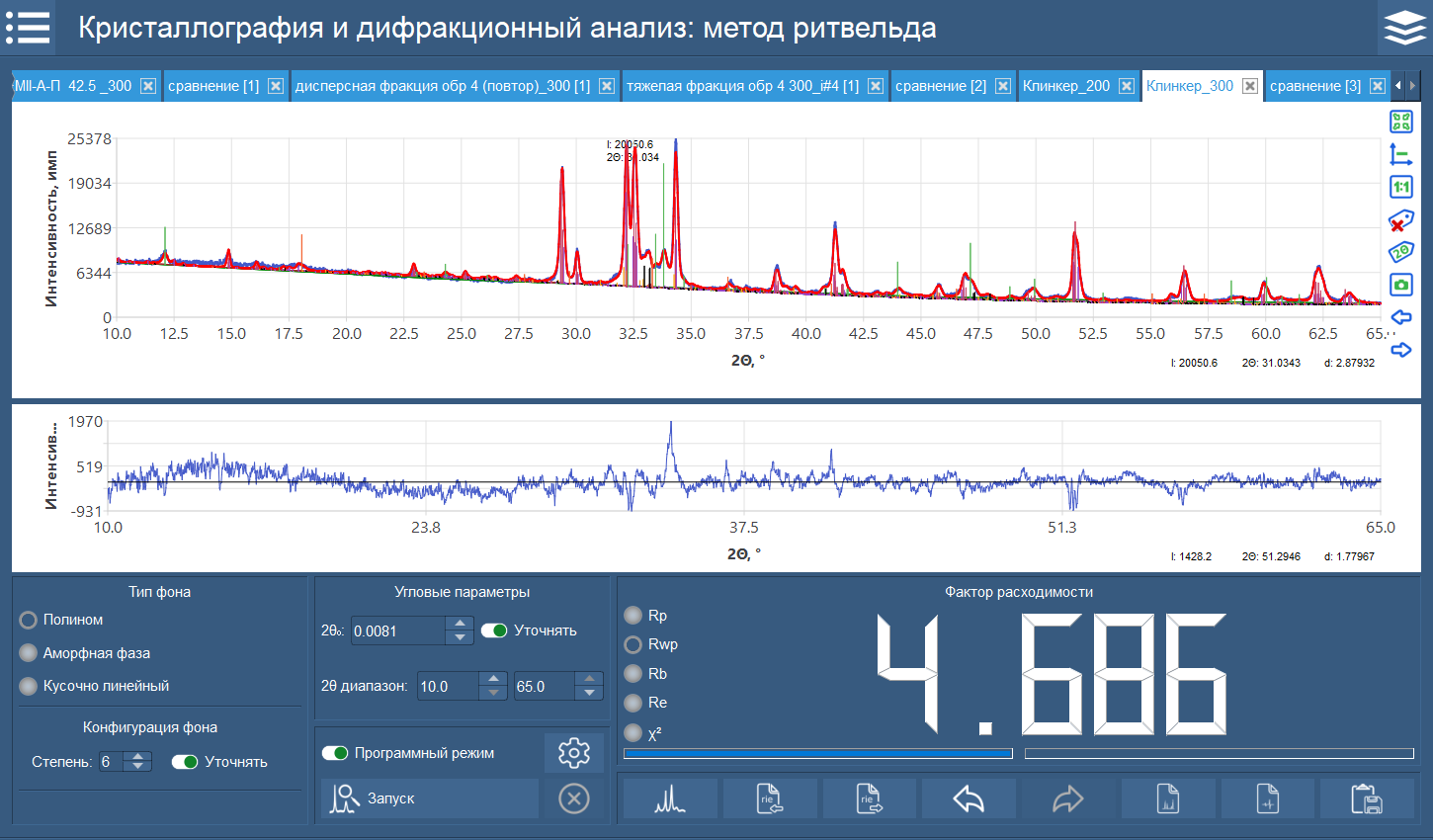
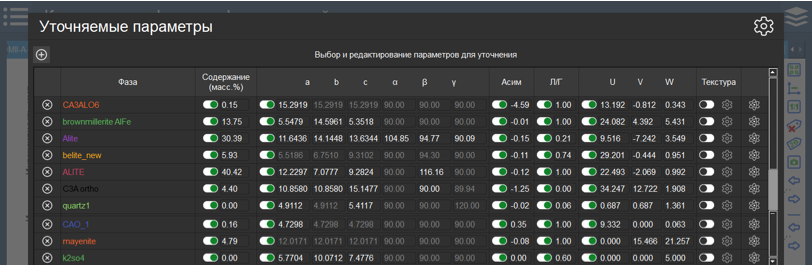
Quantitative analysis of the mineral composition of clinker by the Rietveld method
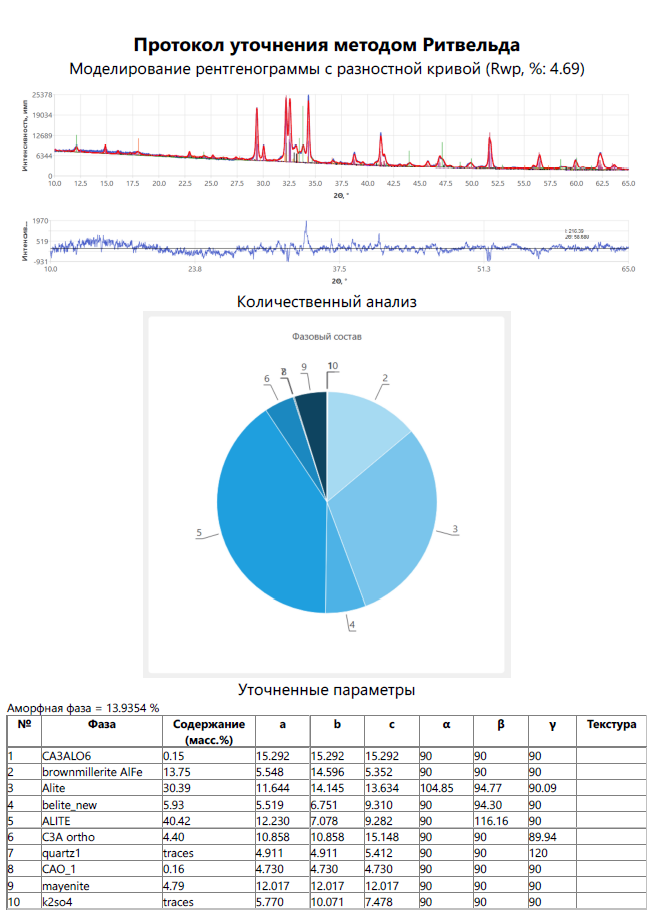
Protocol for quantitative analysis of clinker by the Rietveld method
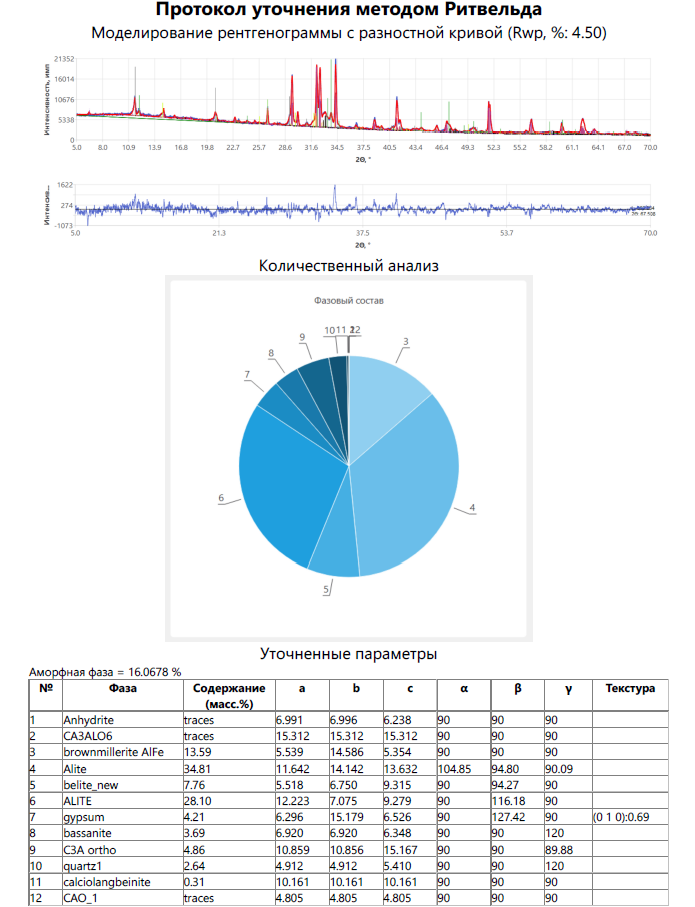
Protocol for quantitative analysis of cement sample No. 1 using the Rietveld method
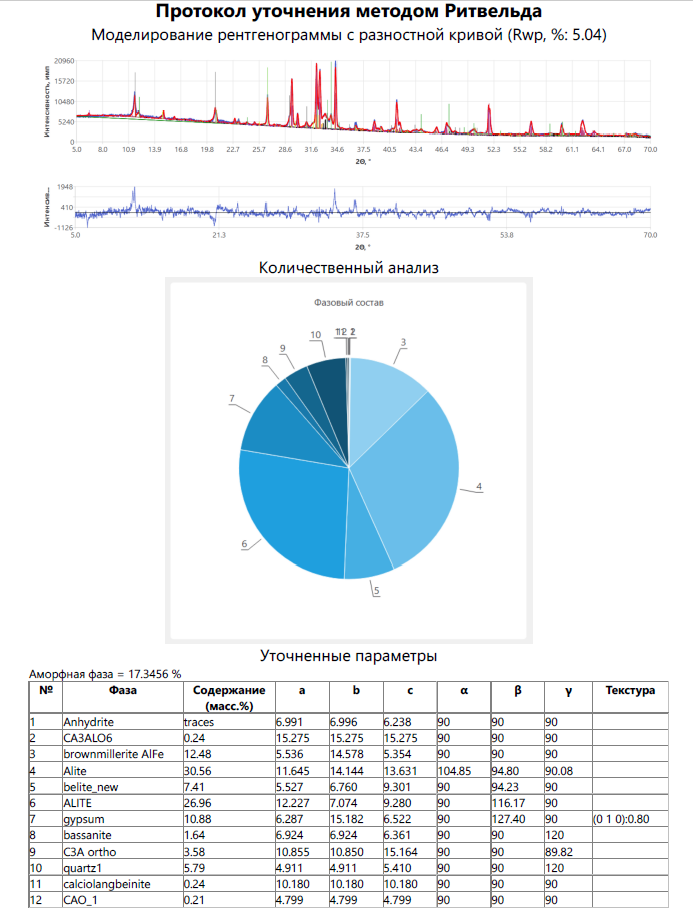
Protocol for quantitative analysis of cement sample No. 2 using the Rietveld method
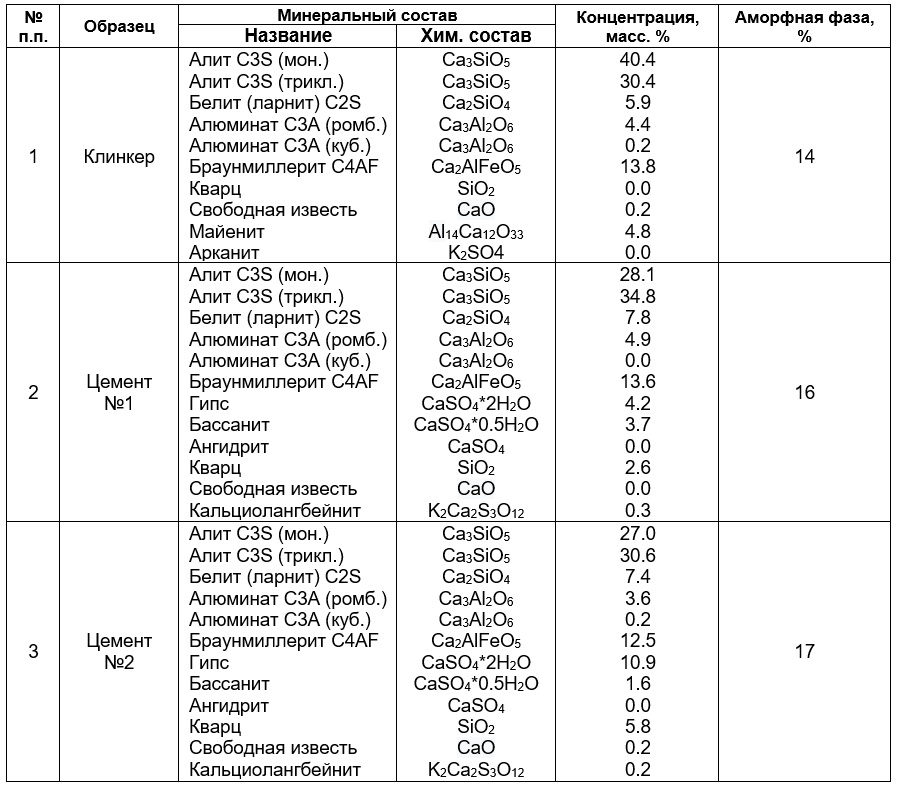
Summary table of results of phase composition studies of samples
CONCLUSION
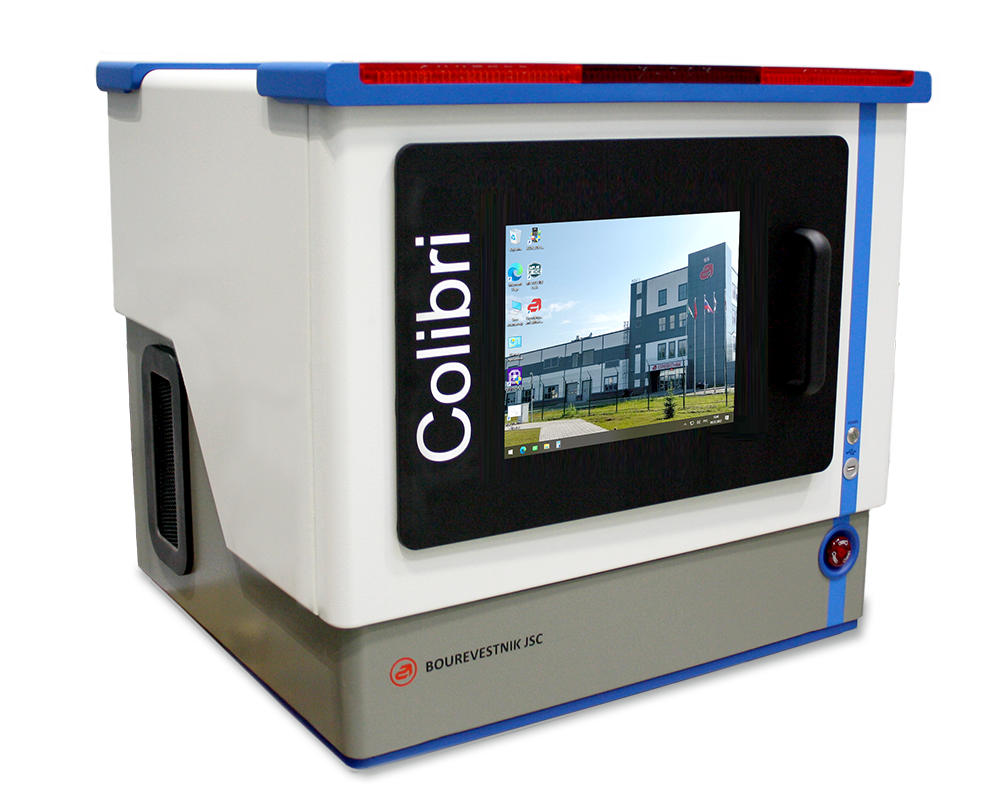
The examples considered clearly demonstrate the functional and methodological capabilities of diffractometers manufactured by JSC “IC “Burevestnik”, which, in combination with analytical software, offer a reliable solution for continuous monitoring of clinker, raw meal and cement itself.