Analysis of the composition and structural state of parts and finished products in mechanical engineering
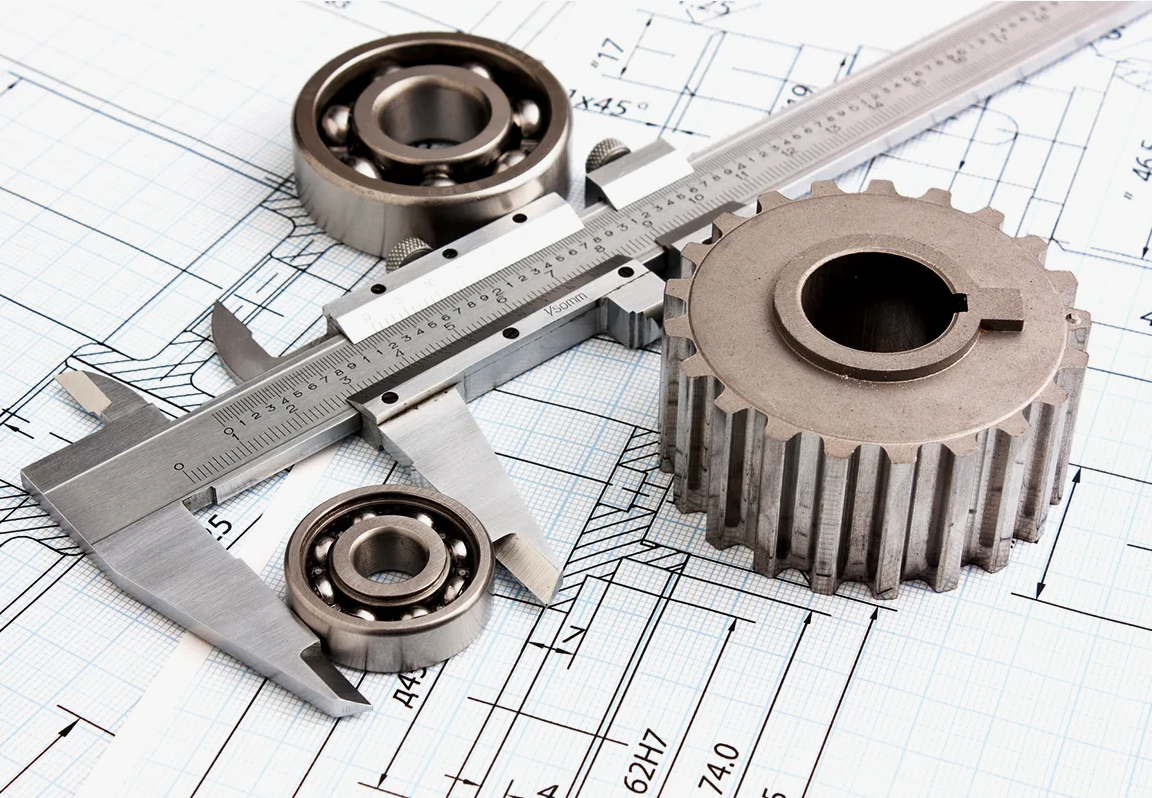
In mechanical engineering one of the most important tasks is to analyze the composition and structural state of parts, units and finished products, as well as to control the technology of their production at various stages.
In the process of mechanical, thermal, chemical and radiation treatment of crystalline materials various phase and structural transformations occur, therefore, the nondestructive method of X-ray diffraction is one of the most important for research and development in this industry.
Example of method implementation
Study of parts made of duralumin D16 with different heat treatment modes.
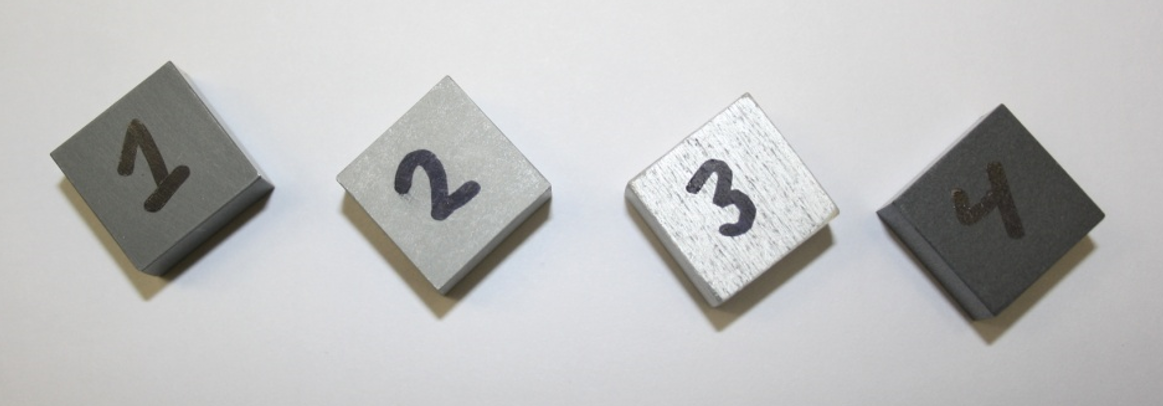
Polycrystalline monolithic samples prepared for measurement (1-source, 2- annealing, 3- quenching and aging, 4- quenching, aging and annealing)
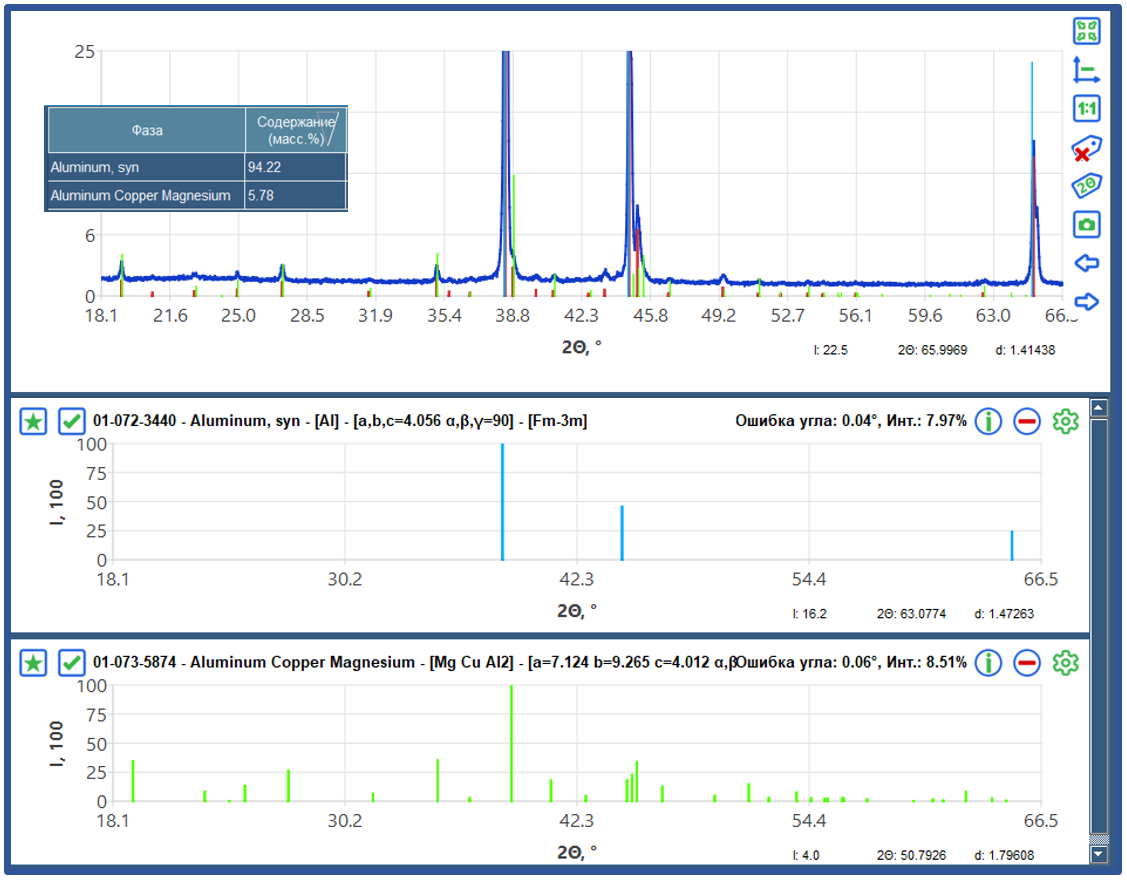
Qualitative and quantitative analysis of the original sample
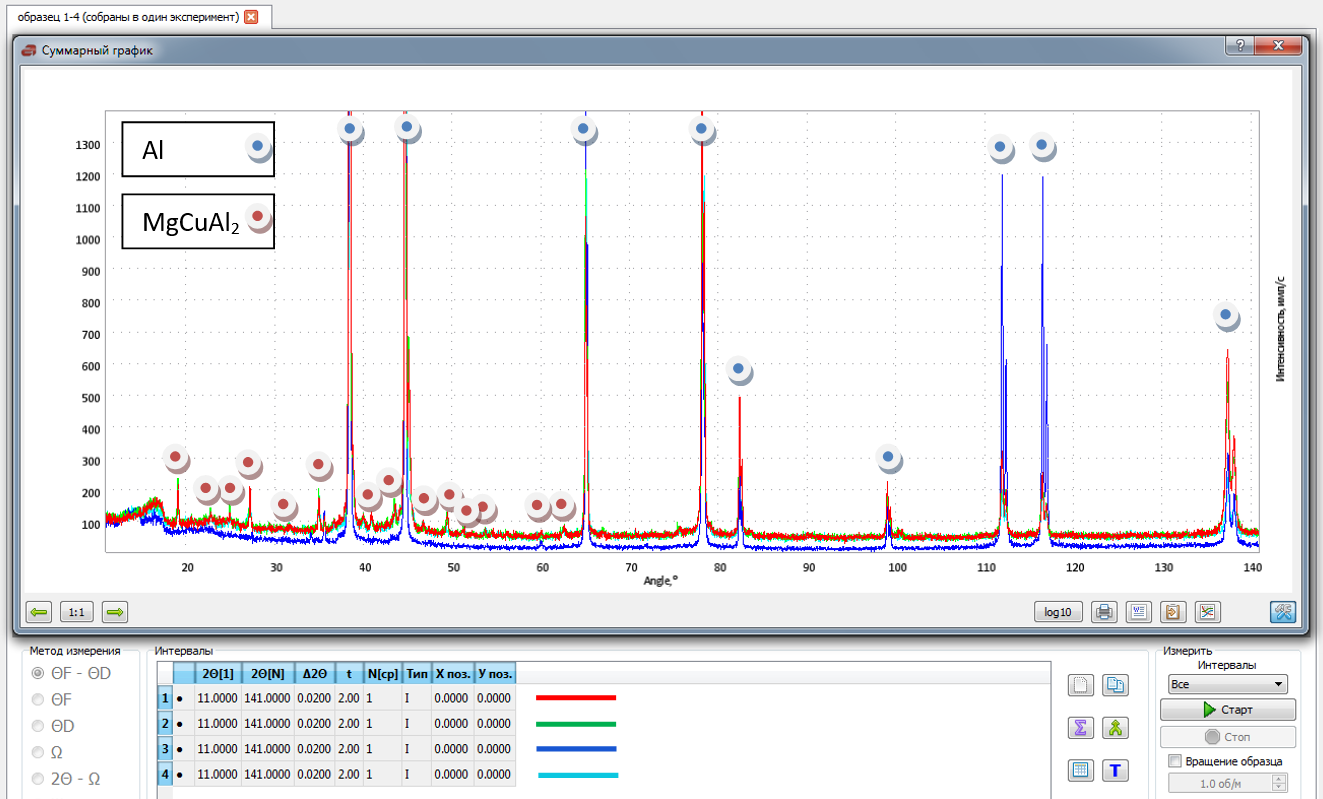
Measured X-ray radiographs of samples 1-4 in the range of angles 2θ from 10 to 140 deg
During quenching and subsequent aging there is a significant change in the phase composition of the alloy towards its homogenization, as well as a change in its structural state towards enlargement of aluminum grains and redistribution of their preferential orientation.
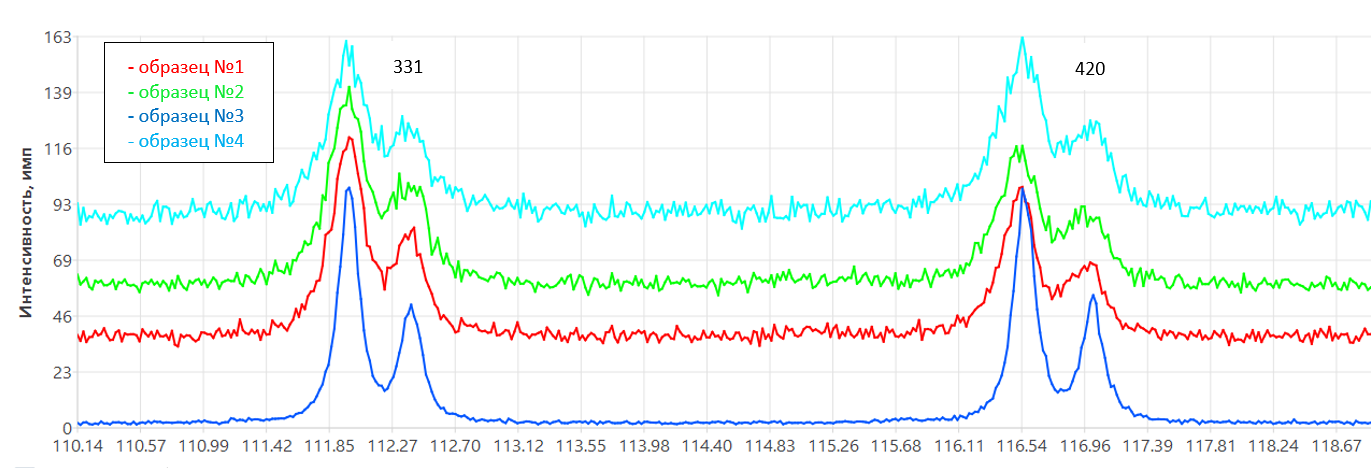
Change of PSWR of aluminum reflexes after heat treatment of samples
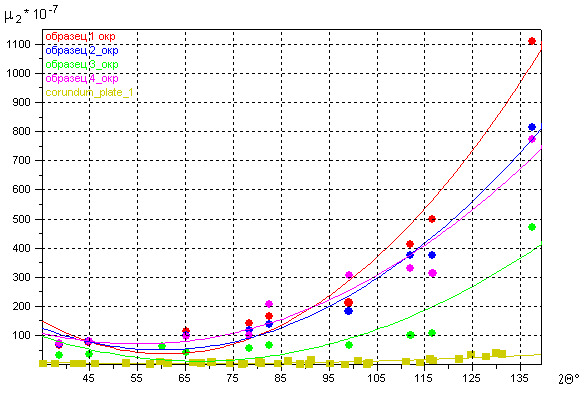
Dependence of second central moments µ2*10-7 on angles 2Θ for samples and standard
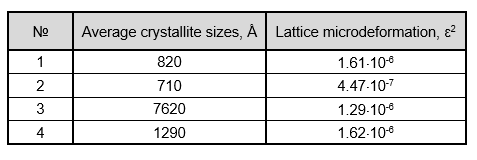
Calculation of average crystallite sizes and lattice microdeformations by the method of second and fourth moments (Sample No. 3 after quenching and aging had an order of magnitude increase in the size of average crystallite sizes compared to the others).
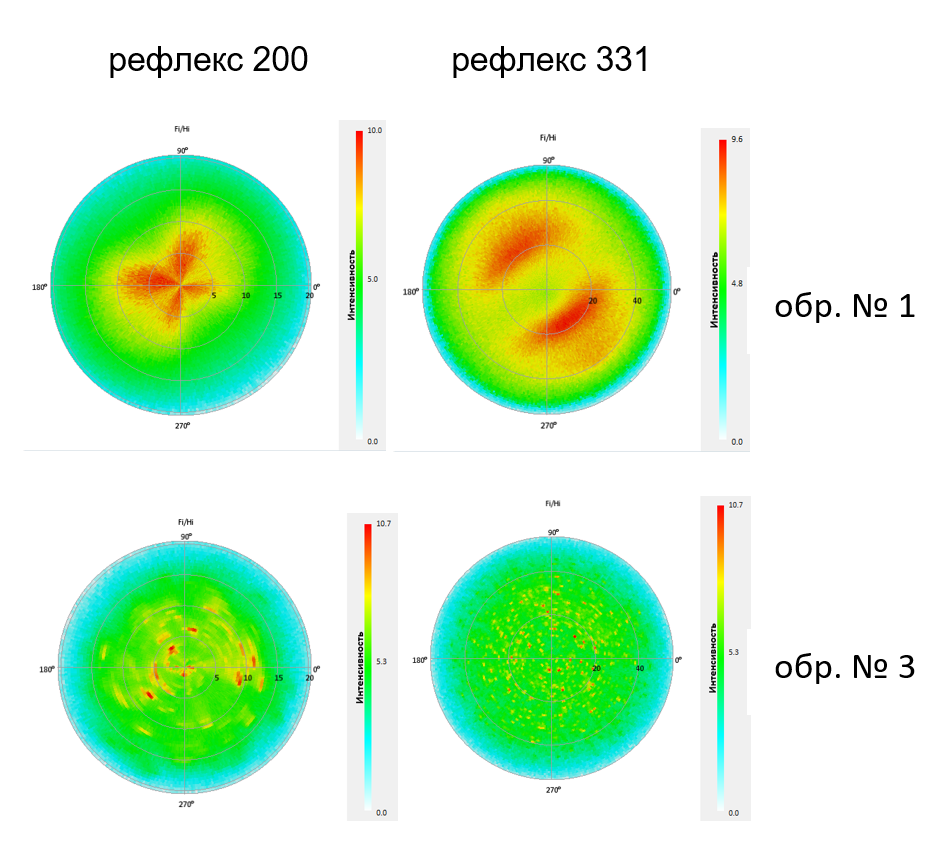
Direct pole figures of samples characterizing the preferential orientation of aluminum grains (texture).
Conclusion
The X-ray diffraction method is informative for technological control of raw materials and finished products in machine-building production, allowing to fully analyze not only their composition and degree of crystallinity, but also to identify those structural features that have a significant impact on their physical and mechanical properties.
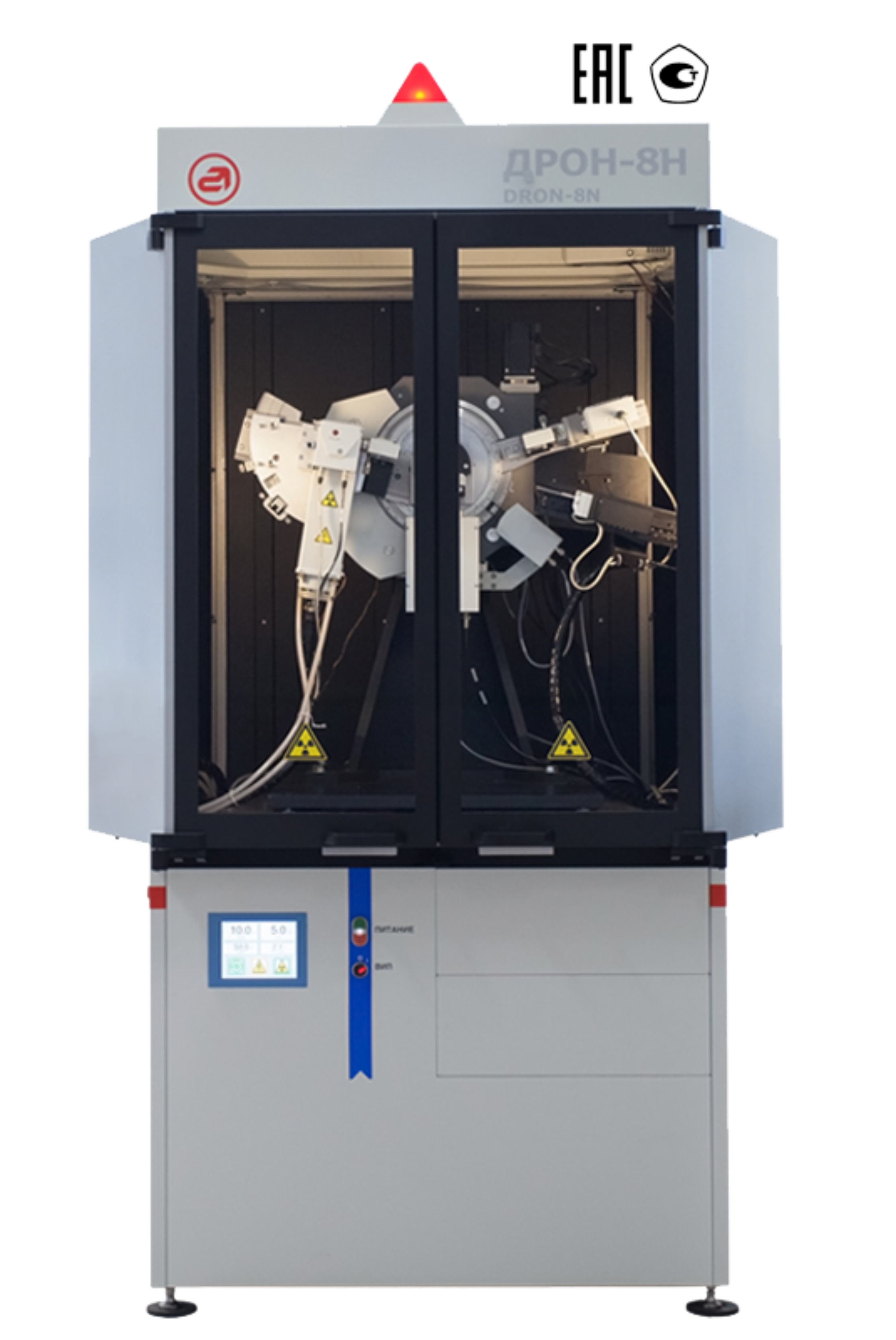
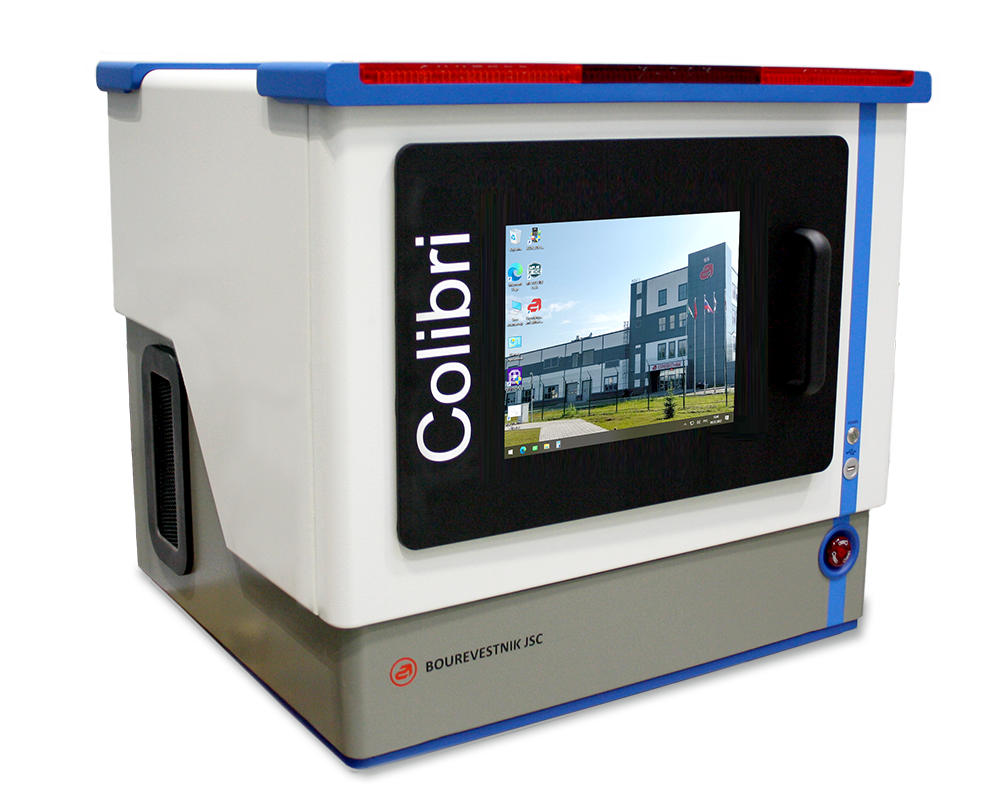
The considered examples clearly demonstrate the functional and methodological capabilities of diffractometers produced by IC Burevestnik JSC, which in combination with analytical software offer a reliable solution of production and research tasks.